
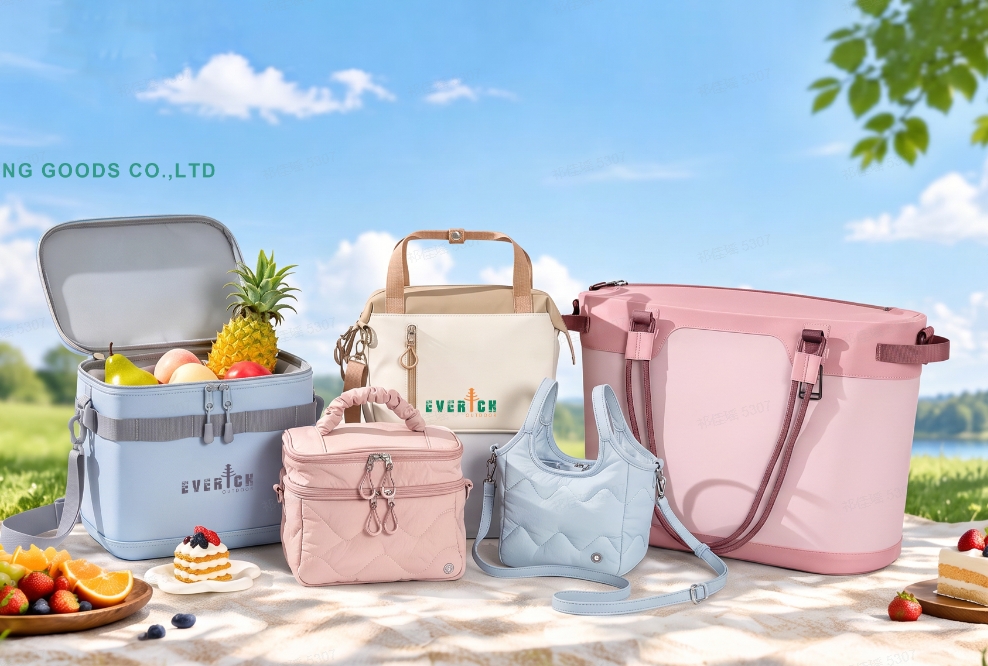
Choosing the right lunch tote bag is no longer only about appearance. For importers, retailers, and corporate buyers, the better question is whether a bag can protect food, withstand repeated use, meet target-market expectations, and remain commercially practical.
This guide compares the features that matter most, from insulation and materials to capacity, cleaning, branding, and quality control. It is designed to help global buyers shortlist products with fewer compromises.
Quick Recommendation
For most everyday programs, a lunch tote with a water-resistant outer fabric, PEVA lining, padded insulation, reinforced handles, and a wipe-clean interior offers the most balanced specification. Buyers serving premium or sustainability-focused markets may prefer recycled polyester or insulated canvas, while compact neoprene designs can work well for short commutes and single-meal use.
| Buyer priority | Recommended direction | Why it works | Points to confirm |
| Everyday office use | Polyester or recycled polyester with PEVA lining | Lightweight, easy to brand, and simple to clean | Stitching, handle comfort, zipper quality |
| Premium retail | Insulated canvas or structured recycled fabric | Better visual appeal and a stronger tactile impression | Weight, colorfastness, and production cost |
| Short commute | Neoprene or compact soft cooler construction | Flexible, lightweight, and easy to carry | Limited capacity and shape retention |
| Family or picnic use | Larger soft cooler with multiple compartments | More room for containers, snacks, and drinks | Seam sealing, shoulder strap, and leak resistance |
| Sustainable product line | Recycled PET or certified canvas | Supports an eco-conscious product story | Recycled content, certification, and packaging claims |
1. Features That Matter in a Lunch Tote Bag
The best specification depends on the end user, but several features consistently influence satisfaction and repeat purchase decisions.
Insulation performance
The lining and insulation should help slow temperature change during a normal working day or commute. Buyers should review the insulation thickness, construction, and coverage rather than relying only on the word “insulated” in a product description. A well-designed bag should also prevent condensation from making the exterior damp.
Capacity and organization
Interior volume should match the intended meal format. A compact bag may suit one lunch box and a drink, while a family-size model needs space for multiple containers and snacks. Internal dividers, mesh pockets, and exterior compartments can improve organization without making the bag unnecessarily bulky.
Leak and moisture protection
An easy-clean lining is essential for daily use. PEVA, coated polyester, and similar materials can make wiping easier, but the seams and zipper area require equal attention. If the product is promoted as leak-resistant, buyers should request a defined test method instead of relying on a general claim.
Carry comfort
Handles should be wide enough to distribute weight and securely attached to the body. Shoulder straps are useful for larger formats, while short handles may be more suitable for office or retail positioning. Sample testing should include a fully loaded bag, not just an empty one.
Cleaning and maintenance
Food contact creates stains, odors, and moisture. A smooth lining, wide opening, and reinforced base can make the product easier to maintain. If the bag is machine washable, buyers should confirm the recommended wash temperature and whether repeated washing affects the insulation or coating.
2. Material Comparison: Durability, Insulation, and Sustainability
Material selection affects performance, appearance, price, and environmental positioning. No single fabric is ideal for every market.
| Material | Durability | Insulation potential | Typical advantages | Common limitations | Sustainability note |
| Nylon | High | Medium | Strong, lightweight, and suitable for technical finishes | May feel less premium without good construction | Check recycled content and coating chemistry |
| Polyester | Medium to high | Medium | Cost-effective, printable, and widely available | Quality varies by denier and weave | Recycled versions are widely used |
| Insulated canvas | High | Medium to high | Premium hand feel and strong visual appeal | Heavier and usually more expensive | Look for certified fibers or recycled blends |
| Neoprene | Medium to high | High for compact formats | Flexible, padded, and comfortable to carry | Can retain odors and offer less structure | Verify composition and end-of-life options |
| Recycled PET fabric | Medium to high | Medium | Supports recycled-material positioning | May require careful color and finish control | Request recycled-content documentation |
The insulation layer also deserves a separate review. Buyers should ask whether the construction uses foam, PE foam, aluminum film, or a multi-layer combination. The practical result depends on thickness, seam coverage, the size of the opening, and how often the bag is opened during use.
3. Style Should Support the Product Positioning
Design is important, but style should reinforce the product’s intended use instead of competing with it. Minimal colors and clean silhouettes often suit office and corporate programs. Brighter patterns, contrast trims, and playful prints may be more appropriate for children, outdoor, or lifestyle collections.
Before approving a design, compare the following elements:
| Design element | Office and corporate line | Lifestyle or retail line | What buyers should check |
| Color palette | Neutral, restrained, easy to coordinate | Seasonal, expressive, or trend-led | Colorfastness and consistency between batches |
| Shape | Structured and compact | Soft, flexible, or oversized | Whether the shape remains stable when loaded |
| Branding | Woven label, embroidery, or subtle print | Larger print, patch, or all-over pattern | Logo size, placement, and print durability |
| Opening | Wide zip opening for easy access | Fold-over, drawstring, or dual-zip options | Smooth operation and cleanability |
| Carry system | Short handles or slim shoulder strap | Adjustable strap or multi-carry design | Load testing and hardware strength |
For B2B buyers, customization should be planned early. Logo method, fabric color, lining color, packaging, hangtags, and carton markings can affect both lead time and minimum order quantity.
4. A Practical Specification Checklist for Global Buyers
Product photos rarely show the details that determine long-term performance. Use a written specification sheet and sample approval process to reduce risk.
| Area | Questions to ask the supplier |
| Dimensions | What are the external and internal measurements? Is the size measured empty or after construction? |
| Capacity | Which lunch box, bottle, or container sizes fit inside? |
| Insulation | What materials and thicknesses are used? Is the insulation continuous around the base and lid? |
| Lining | Is the lining food-safe, water-resistant, and easy to wipe clean? |
| Seams | Are high-stress areas reinforced? Are seams bound or sealed where needed? |
| Hardware | What zipper, buckle, and handle materials are used? Has the hardware been cycle-tested? |
| Printing | Which decoration method is recommended for the selected fabric? Has it passed wash or rub testing? |
| Packaging | Are individual polybags, recycled packaging, carton marks, and barcode labels available? |
| Compliance | Which market-specific testing or documentation is required? |
5. How to Read User Feedback More Effectively
Reviews are useful when they are grouped by pattern rather than read as isolated comments. A single complaint may reflect misuse, but repeated comments about the same component can reveal a design weakness.
| Repeated customer comment | Possible cause | Follow-up action |
| Food does not stay cool for long | Thin insulation, frequent opening, or poor lid coverage | Request a time-and-temperature test under a defined condition |
| Bag becomes bulky when full | Oversized structure or weak internal organization | Test the loaded sample with the intended container set |
| Seams begin to fray | Insufficient seam allowance or reinforcement | Inspect stress points and request a load test |
| Zipper is difficult to use | Tight curve, poor tape alignment, or weak slider | Test the zipper repeatedly with one-hand operation |
| Interior is hard to clean | Narrow opening or textured lining | Compare wipe tests and stain-removal performance |
| Odor remains after use | Material, coating, or trapped moisture | Check material specifications and ventilation during drying |
This approach turns reviews into actionable product improvements instead of treating them as simple approval or rejection signals.
6. Choosing the Right Product for Different Buyer Groups
Global buyers usually serve more than one user type. A small range with clearly defined use cases can be more effective than one universal model.
Office and commuter buyers: prioritize a clean silhouette, moderate capacity, comfortable handles, and a lining that can be wiped quickly.
Families and outdoor users: prioritize larger capacity, stronger insulation, multiple carrying options, and a reinforced base.
Promotional programs: prioritize logo visibility, color availability, packaging flexibility, and a reliable production schedule.
Premium lifestyle retailers: prioritize fabric hand feel, hardware details, color development, and consistent finishing.
Sustainability-led retailers: prioritize documented recycled content, durable construction, repairability, and realistic environmental claims.
Final Buying Advice
The best lunch tote bag is the one that matches its market, use case, and price position. Buyers should not evaluate insulation, appearance, or sustainability separately. A stylish bag with weak handles will create returns; a highly durable bag with an awkward opening may receive poor reviews; and an eco-focused claim without supporting documentation can damage customer trust.
Start with the intended user, define the required capacity, confirm insulation and lining materials, and test a fully loaded sample. Then review the construction details, branding options, packaging, and compliance documents before placing a bulk order.
For most global programs, a balanced specification—water-resistant outer fabric, reliable insulation, easy-clean lining, reinforced carrying points, and clear quality-control standards—offers the strongest foundation for a successful lunch tote bag collection in 2026.
 English
 Spanish
 Portuguese