
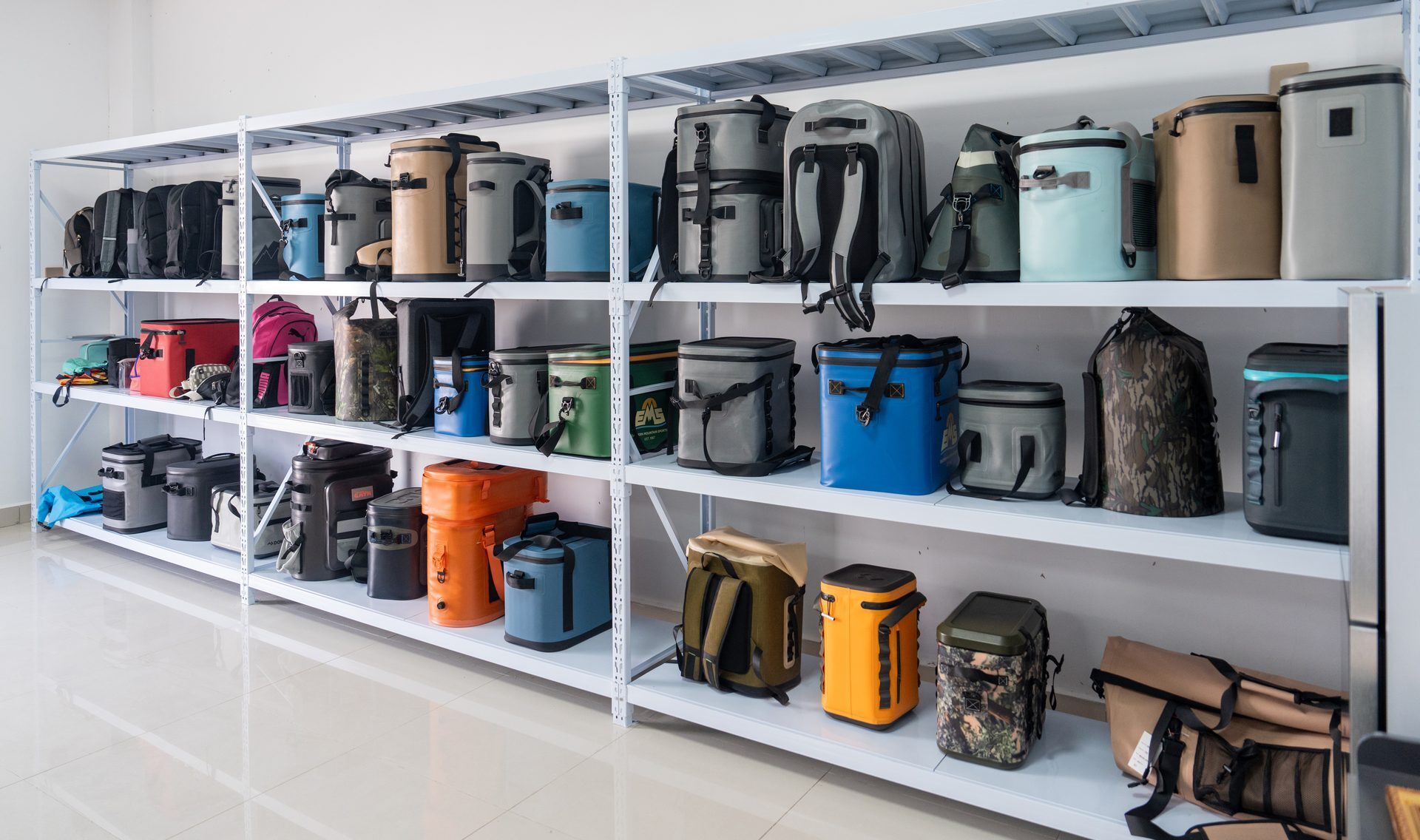
Introduction
Choosing a backpack manufacturer is a product-development decision, not simply a price comparison. The right factory must turn a concept, reference sample or technical drawing into a repeatable product with consistent materials, reliable construction and commercially viable pricing.
For brands, retailers, importers and promotional buyers, a professional backpack manufacturer may support the complete process—from design and pattern development to sampling, logo application, mass production, inspection and export packaging.
The most suitable supplier depends on your product category, target customer, order quantity, destination market and required compliance. A school backpack, laptop backpack, hiking pack and tactical backpack may all be made in the same factory, but their materials, testing and construction standards are different.
What Does a Backpack Manufacturer Do?
A backpack manufacturer normally works under one or more of the following production models:
| Production model | Buyer provides | Manufacturer provides | Best for |
| OEM | Tech pack, drawing or physical sample | Pattern development, sampling and production to specification | Brands with an original design |
| ODM | Product direction or selected catalog style | Existing design adapted with materials, colors and branding | Faster product launches |
| Private label | Brand identity and target product | Labels, logos, packaging and production | Retail and e-commerce brands |
| Stock customization | Existing product and logo artwork | Decoration and simple packaging changes | Promotional or short-lead orders |
Clarify the production model before requesting a quotation. A catalog backpack with a printed logo is not the same as a fully custom backpack developed from scratch.
Backpack Categories a Factory Can Produce
The product category determines the technical requirements and factory experience you should prioritize.
| Backpack category | Typical materials | Important features | Main buyer concern |
| School backpack | Polyester, nylon, mesh | Lightweight structure, organization, reflective details | Safety, price and durability |
| Laptop backpack | Nylon, polyester, coated fabric | Padded laptop sleeve, organizer, trolley strap | Device protection and comfort |
| Travel backpack | Nylon, polyester, canvas | Expandable storage, compression, luggage pass-through | Capacity and airline usability |
| Hiking backpack | Ripstop nylon, technical mesh | Ventilation, sternum strap, waist belt, hydration sleeve | Load distribution and weather resistance |
| Tactical backpack | High-denier nylon, ripstop | MOLLE webbing, reinforced points, modular pockets | Abrasion resistance and field reliability |
| Sports backpack | Polyester, nylon, mesh | Shoe compartment, wet/dry separation, ventilation | Easy cleaning and activity-specific storage |
| Promotional backpack | Polyester, cotton, non-woven fabric | Simple construction, large logo area | Unit cost and branding efficiency |
Materials and Components to Specify
Material selection affects durability, appearance, weight, price and product positioning. Polyester is flexible and cost-effective. Nylon is often selected for abrasion resistance and a technical feel. Canvas supports lifestyle and heritage designs, while recycled polyester can support a documented sustainability program.
Do not specify only the outer fabric. A complete bill of materials should include:
- Outer fabric composition, denier or weight and coating.
- Lining material and colorfastness requirements.
- Foam type and thickness for straps, back panels and laptop sleeves.
- Webbing width, thickness and tensile requirements.
- Zipper brand or performance specification.
- Buckle, cord lock, mesh and reinforcement materials.
- Thread type, stitch density and bar-tack locations.
- Labels, logo method, packaging and carton markings.
| Component | What to define | Why it matters |
| Outer fabric | Fiber, denier, weave, coating and color | Controls wear, weight and appearance |
| Lining | Composition, hand feel and cleaning needs | Affects usability and perceived quality |
| Foam | Density, thickness and recovery | Determines comfort and protection |
| Zippers | Size, puller, teeth or coil and supplier | Influences durability and opening feel |
| Webbing | Width, thickness and color | Supports straps and attachment points |
| Hardware | Buckles, adjusters and hooks | Affects function, weight and reliability |
How Custom Backpack Manufacturing Works
Most projects follow a staged development process:
- Project brief: Confirm customer, application, capacity, target price and order quantity.
- Design review: Evaluate drawings, reference images, tech packs or physical samples.
- Material selection: Confirm fabric, lining, foam, zippers, hardware and color references.
- Pattern development: Create panels, seam allowances, pocket placement and construction details.
- Prototype sampling: Produce a sample for dimensions, comfort, capacity and appearance review.
- Revision and approval: Record changes in a controlled specification and approve the final sample.
- Bulk production: Cut, sew, assemble, decorate and inspect according to the approved sample.
- Final inspection and packing: Verify workmanship, quantities, cartons and shipping documents.
The approved sample should be the production reference. Any later substitution of fabric, zipper, foam or hardware should be documented and approved before mass production.
How to Evaluate a Backpack Factory
Product photos alone do not prove manufacturing capability. Ask suppliers for evidence of relevant experience, sample development, quality control and export support.
| Evaluation area | Questions to ask | Evidence to request |
| Product experience | Do you regularly make this backpack category? | Similar samples or product references |
| Development | Can you work from a tech pack or reference sample? | Sample timeline and revision process |
| Capacity | Can you support the expected monthly volume? | Production plan or capacity explanation |
| Quality control | How are materials, sewing and dimensions checked? | QC checklist or inspection report |
| Branding | Which logo, label and packaging methods are available? | Decoration samples and artwork requirements |
| Commercial terms | What are MOQ, lead time and payment terms? | Formal quotation with assumptions |
| Logistics | Which incoterms and export documents are supported? | Packing and shipping examples |
Communication quality is also an important qualification signal. A supplier that records specifications precisely is less likely to create an expensive misunderstanding during production.
MOQ, Sampling and Quality Control
MOQ may be calculated per style, color, material or total order. A stock-fabric backpack normally has more flexibility than a design requiring custom fabric, special hardware or molded parts.
Sampling should check more than appearance. Load the backpack with realistic contents and review comfort, balance, pocket access, laptop protection, zipper operation and strap adjustment. During bulk production, inspect fabric shade, panel alignment, dimensions, stitch quality, bar-tacks, hardware, logo placement, cleanliness and packaging.
Final Takeaway
The best backpack manufacturer is the partner that matches your category, order size, target market and quality expectations. Define the use case first, document every component, approve a representative sample and confirm the quality plan before placing a bulk order.
FAQ
What is the difference between OEM and ODM backpack manufacturing?
OEM production follows the buyer’s design or specification. ODM production starts with a manufacturer’s existing design that is adapted for the buyer’s brand.
What is the best fabric for a backpack?
There is no universal best fabric. Polyester is practical for value programs, nylon supports abrasion resistance, canvas works for lifestyle products and recycled fabrics may support a verified sustainability position.
How do I request a backpack manufacturer quotation?
Send dimensions, capacity, materials, colors, compartments, logo method, packaging, quantity, destination and target delivery date. A drawing, tech pack or reference sample improves pricing accuracy.
How can I reduce production risk?
Approve a detailed pre-production sample, document substitutions, use a written inspection checklist and inspect the finished goods before shipment.
 English
 Spanish
 Portuguese