
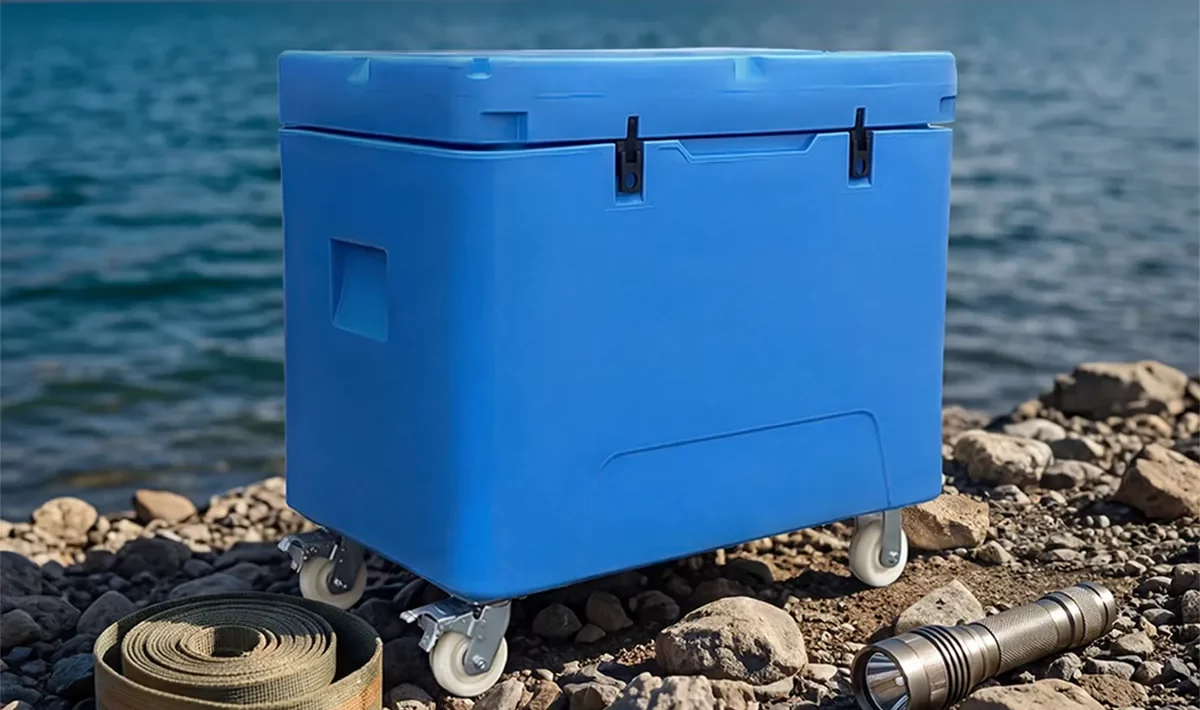
Wheeled ice coolers are becoming increasingly popular because they solve one of the biggest problems in the hard cooler category: weight. A premium hard cooler can keep food and drinks cold for days, but once it is filled with ice, beverages, fish, or food, it can become difficult to move. Wheels make the product more practical for real outdoor use.
For camping, fishing, beach trips, tailgating, sports events, marine activities, and outdoor retail programs, a wheeled ice cooler can offer the right balance between cold retention and portability. It gives users the capacity of a hard cooler without forcing them to carry the full load by hand.
For outdoor brands, this creates a strong product development opportunity. However, designing a good wheeled ice cooler is not as simple as adding wheels to a standard cooler box. The wheel structure, handle design, insulation, drainage, capacity, body material, and user scenario must all work together.
Why Wheeled Ice Coolers Are in Demand
Consumer expectations have changed. People still want ice retention, but they also want convenience. A cooler that performs well in a lab test may still frustrate users if it is hard to transport across a campsite, beach, dock, parking lot, or backyard.
Wheeled coolers are especially useful for family camping, fishing trips, beach outings, outdoor parties, sports events, and overlanding. In these scenarios, users often carry heavy loads. A cooler may contain ice, drinks, meat, fruit, bait, seafood, or prepared meals. Without wheels, moving the cooler can require two people.
Wheeled designs make the product accessible to more users. Families, older consumers, solo campers, and event organizers may prefer a wheeled cooler because it reduces physical effort. This makes the category attractive for both retail and private label development.
Capacity Planning for Wheeled Ice Coolers
Capacity is one of the first decisions in wheeled ice cooler design. A smaller cooler may be easier to move, but it may not hold enough for group activities. A larger cooler may offer better storage but becomes heavier and more expensive.
Small wheeled coolers, such as 15QT to 25QT models, are suitable for day trips, lunch storage, short beach visits, and personal use. They are easier to store in vehicles and apartments. These models can appeal to urban consumers and casual outdoor users.
Medium wheeled coolers, such as 35QT to 55QT models, are often the most versatile. They can support camping weekends, family picnics, tailgating, and fishing trips. This size range offers enough capacity without becoming too difficult to manage.
Large wheeled coolers are better for marine use, group events, hunting camps, fishing, and extended trips. However, large models require stronger structural design. The wheels, handle, axle, and body must support significant weight when fully loaded.
Brands should define capacity based on real use rather than only market trends. A cooler designed for beach retail may need a different shape than a cooler designed for fishing boats.
Wheel Design Matters More Than Many Brands Expect
Wheels are one of the most important parts of a wheeled ice cooler. Poor wheel design can ruin the user experience. Thin plastic wheels may work on smooth floors, but outdoor users often pull coolers over sand, gravel, grass, docks, rocks, stairs, and uneven campground paths.
For outdoor use, wheels should be wide enough to improve stability and reduce sinking into soft ground. The axle should be strong enough to handle repeated load stress. Wheel housings should be reinforced because this area receives impact during transport.
The wheel material also matters. Hard plastic wheels may be cheaper, but they can be noisy and less comfortable on rough surfaces. Rubberized or all-terrain wheels may improve perceived quality and performance. For premium models, puncture-resistant wheels can become a strong selling point.
Wheel placement affects balance. If the wheels are too small or positioned poorly, the cooler may drag, tilt, or feel unstable. A well-designed wheeled cooler should roll smoothly when full and remain stable when parked.
Handle Design and Pulling Comfort
A wheeled cooler also needs a reliable handle system. The handle should be strong, comfortable, and suitable for the cooler’s full-load weight. A weak handle creates a high risk of product failure.
There are several handle options. A telescoping handle can make the cooler feel more like luggage and is useful for urban or event use. A fixed tow handle may be stronger for rugged outdoor applications. Side handles are still important because users may need to lift the cooler into a vehicle, boat, or truck bed.
Grip comfort should not be overlooked. A fully loaded ice cooler can be heavy. A handle with poor grip can cause hand fatigue or slipping. Rubberized or textured grips improve control and comfort.
Brands should test handle performance under real load conditions. It is not enough for the handle to work when the cooler is empty.
Insulation and Ice Retention
Even with wheels, the core function of an ice cooler remains cooling performance. Consumers expect a hard cooler to keep contents cold for longer than a basic picnic cooler. Insulation design is therefore critical.
Premium ice coolers often use thick insulated walls, pressure-injected foam, tight lid seals, and strong latches. These features help reduce heat transfer and keep cold air inside. A freezer-style gasket can improve sealing around the lid. Durable latches help maintain compression and reduce warm air intrusion.
However, ice retention claims should be handled carefully. Real-world performance depends on many factors, including how much ice is used, whether the cooler is pre-chilled, outside temperature, direct sun exposure, and how often the lid is opened. Brands should avoid unrealistic promises and instead educate users on how to maximize cooling performance.
A useful content strategy is to include ice retention tips in product pages and blog articles. For example, users can pre-chill the cooler, use more ice than contents, keep the cooler in shade, avoid frequent opening, and drain water only when appropriate for the use case.
Drainage and Cleaning
Drainage is an important feature for wheeled ice coolers, especially medium and large models. After ice melts, users need an easy way to remove water without lifting the cooler. A drain plug makes cleaning and maintenance much easier.
The drain system should be positioned low enough for efficient water removal. The plug should be secure to prevent leakage during transport. For larger coolers, a drain channel or dual drain design may improve usability.
Cleaning is especially important for fishing and marine coolers. Fish, bait, saltwater, and food residue can create odor and hygiene issues. Smooth interior surfaces, easy-access corners, and removable accessories can help users clean the cooler more thoroughly.
Lid Function and Added Features
The lid is another area where brands can create value. A flat, strong lid can serve as a temporary seat, table, or preparation surface. Some designs include cup holders, fish rulers, bottle openers, cutting board compatibility, or storage grooves.
However, brands should avoid adding features that weaken the core structure. Every added feature should match the intended use. A beach cooler may benefit from cup holders and bright colors. A fishing cooler may benefit from a fish ruler and non-slip lid. A camping cooler may benefit from a divider system or dry storage basket.
Accessory compatibility can also increase long-term value. Baskets, dividers, ice packs, bottle openers, and tie-down kits can create upsell opportunities.
OEM Customization Opportunities
For outdoor brands, a custom wheeled ice cooler can be developed around specific market needs. Customization options may include capacity, body color, wheel size, handle structure, latch type, drain plug design, lid texture, logo placement, packaging, and accessories.
A private label wheeled cooler should have a clear product story. Instead of simply saying “large ice cooler with wheels,” brands can position the product for camping weekends, beach families, fishing trips, marine storage, outdoor events, or tailgating.
Everich Outdoor can support custom ice cooler development for brands and retailers, including hard coolers, wheeled coolers, soft cooler bags, and related outdoor products. With OEM/ODM support, brands can define product structure, materials, colors, logo application, packaging, and production requirements based on their target market.
Conclusão
Wheeled ice coolers are a practical response to real consumer needs. Buyers want cold retention, but they also want easier transport. A well-designed wheeled cooler can make camping, fishing, beach travel, and outdoor events more convenient.
For brands, success depends on more than adding wheels. Capacity, wheel quality, handle strength, insulation, drainage, cleaning, lid function, and customization must all work together. When designed properly, a wheeled ice cooler can become a high-value product in an outdoor collection and a strong entry point for private label cooler programs.
 English
 Spanish
 Portuguese