
Introducción
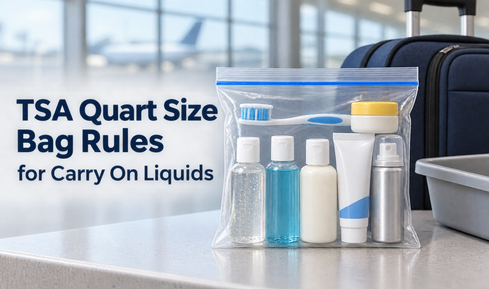
A well-organized liquids bag can make airport screening faster and reduce the chance of having products removed. In the United States, the TSA 3-1-1 rule generally requires liquids, gels and aerosols in carry-on baggage to be in containers of 3.4 ounces or less, placed in one clear, resealable quart-size bag per passenger. Travelers should confirm current requirements before flying because airport procedures and exemptions can change.
The TSA 3 1 1 Rule Explained
The three parts are simple: each container should be 3.4 fluid ounces or 100 milliliters or less, the containers should fit in one clear quart-size resealable bag, and each passenger is generally limited to one such bag. The rule applies to liquids, gels, aerosols, creams and similar substances in carry-on luggage.
The bag is not a magic exemption. If a container is too large, the product may need to go in checked baggage or be surrendered unless an exception applies. The final decision belongs to the screening process at the airport.
| Rule element | Practical meaning | Packing action |
| 3.4 ounces or 100 ml | Each container must meet the size limit | Check the container label, not only how full it is |
| One quart-size bag | Items should fit in one clear resealable bag | Choose a compliant bag and avoid overfilling |
| One bag per passenger | The allowance is generally per traveler | Combine personal liquids before reaching security |
How Strict Is TSA with Quart Size Bags
TSA screening is not based only on whether a bag looks approximately quart-sized. The bag should be clear, resealable and able to contain the permitted liquids. If the bag is opaque, oversized, impossible to close or packed with containers above the limit, the traveler may face additional screening or be asked to remove items.
Security measures can vary, and officers may inspect a bag even when it appears compliant. Use the rule as a preparation standard rather than a guarantee of a specific screening outcome.
What Counts as a Liquid Gel or Aerosol
Common examples include shampoo, conditioner, toothpaste, sunscreen, lotion, perfume, liquid foundation, mascara, shaving gel and aerosol deodorant. Semi-solid or spreadable products can also be treated as liquids for screening purposes.
Pack solid alternatives where practical, such as bar soap, solid shampoo or powder cosmetics. This reduces the number of items competing for limited space in the quart bag.
| Item type | Common examples | Packing advice |
| Liquid | Shampoo, lotion, perfume | Use containers at or below 100 ml |
| Gel or cream | Toothpaste, shaving gel, sunscreen | Treat it as a liquid for carry-on planning |
| Aerosol | Spray deodorant or hair spray | Check both size and airline restrictions |
| Solid alternative | Bar soap or solid cosmetics | Pack outside the liquids bag when allowed |
How to Pack the Bag Efficiently
Use travel-size containers and remove unnecessary packaging. Put the most frequently inspected items where they are easy to see. Do not force the zipper closed; an overfilled bag can split or prevent a clear inspection.
A flat rectangular pouch is often easier to organize than a deep cosmetic case. If you are designing or sourcing a toiletry bag, consider clear material, a wide opening, a strong zipper, leak-resistant seams and dimensions that support practical packing.
Medical and Baby Item Exceptions
Medically necessary liquids, breast milk and infant formula may be treated differently from ordinary toiletries, but travelers should separate them, declare them to the officer and allow additional screening. Carry supporting information when it is useful, and check TSA guidance for the specific situation before travel.
TSA PreCheck can change which items a traveler needs to remove at screening, but it does not eliminate the underlying liquids limits. Airport security remains subject to screening procedures.
How to Choose a Travel Liquids Bag
For a reusable quart-size bag, look for clear material, a reliable resealable closure, reinforced seams, easy cleaning and enough flexibility to fit containers without excessive stretching. The bag should be durable but not so rigid that it wastes space.
Manufacturers developing private-label travel bags should define finished dimensions, clear material, zipper type, seam construction, leak testing, logo placement and packaging. Do not claim TSA approval unless the product and claim have been properly substantiated.
Conclusión
The simplest way to prepare is to keep each liquid container at or below 3.4 ounces or 100 milliliters, place eligible items in one clear resealable quart-size bag and make it easy to remove for screening. Always check current official guidance and your airline’s rules before departure.
Preguntas frecuentes
Does the quart-size bag have to be clear?
TSA guidance describes a clear, resealable quart-size bag for the 3-1-1 liquids rule. A clear bag makes screening easier and avoids ambiguity.
Can I bring multiple quart-size bags?
The general rule is one quart-size liquids bag per passenger. Medical and infant-related items may be handled differently.
Does TSA measure the bag?
Screening officers may judge whether the bag is compliant and may inspect it. Do not rely on a bag that is obviously oversized or cannot close.
Can I use a reusable toiletry bag?
Yes, if it is clear, resealable, appropriately sized and suitable for the items you are carrying.
Are medical liquids exempt?
Some medically necessary liquids may qualify for an exception, but they should be declared and may receive additional screening.
 English
 Spanish
 Portuguese